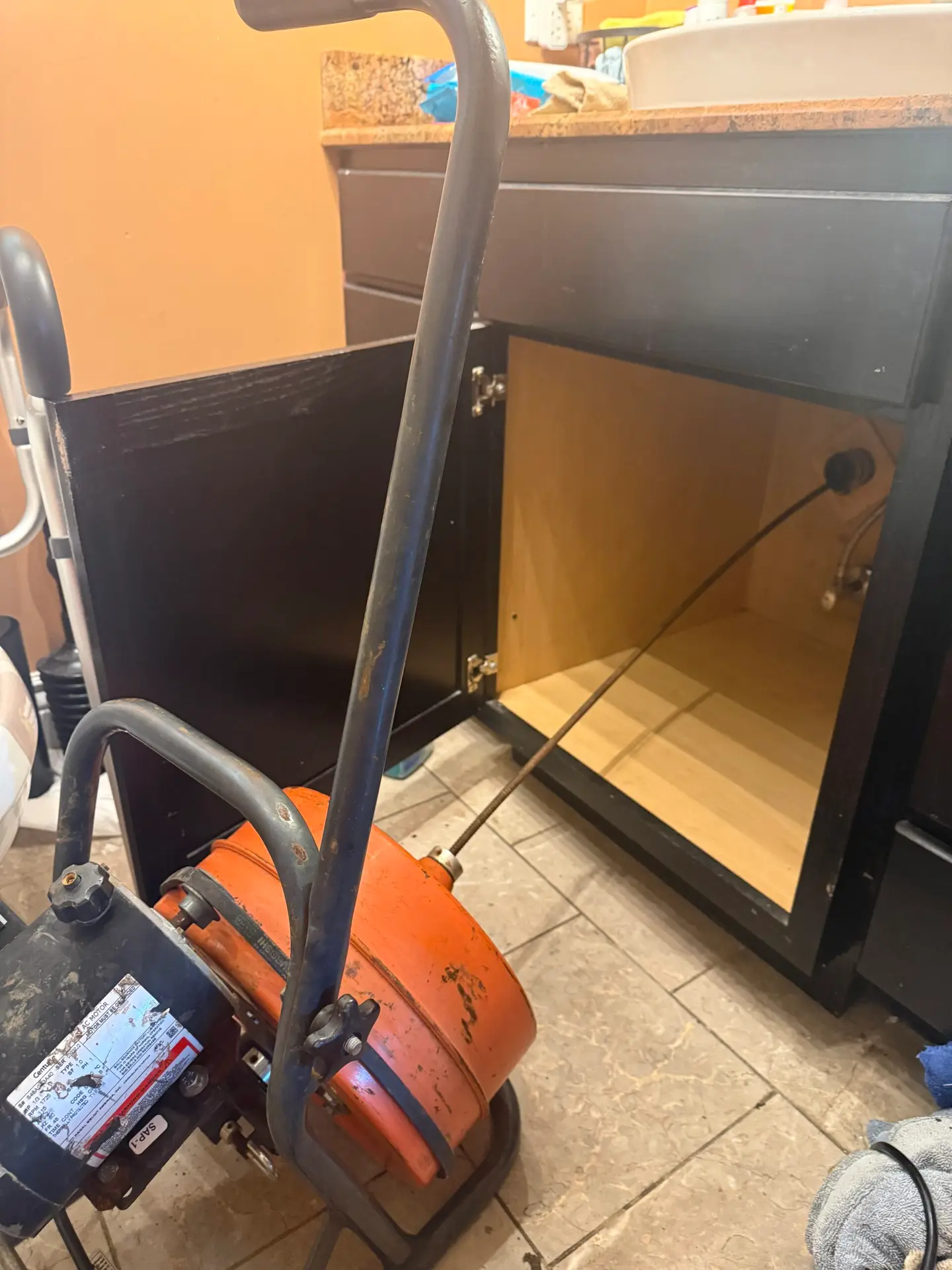
Your home’s drains are designed to carry wastewater—not grease, garbage, cleaning debris, or anything else that happens to fit through the opening. Many serious drain clogs develop gradually as these materials collect inside the piping.
Knowing what not to put down your drains can help prevent backups, unpleasant odors, damaged piping, and emergency plumbing repairs.
What Should Never Go Down a Drain?
Keep dirty mop water and loose fibers, cooking grease, “flushable” wipes, paper products, hygiene products, coffee grounds, food scraps, paint, construction debris, harsh chemicals, hair, and dental floss out of household drains. Here is why each one causes trouble—and how to dispose of it more safely.
1. Dirty Mop Water and String-Mop Fibers
Never pour dirty mop water into a kitchen sink, bathroom sink, bathtub, shower, or floor drain.
Mop water may look harmless, but it can contain sand, dirt, pet hair, food particles, grease, and other debris collected from the floor. These materials can settle inside traps and drainpipes.
String mops create an additional problem. Their braided strands can fray and break loose while the mop is being used or emptied. The fibers may catch on drain fittings, pipe joints, traps, or rough areas inside older piping. Once caught, they act like a net, collecting hair, grease, soap residue, and other debris until the drain becomes restricted or completely clogged.
Allow debris to settle, strain solid material into the trash, and follow the cleaning-product manufacturer’s disposal instructions and local requirements. When permitted, the remaining strained liquid can generally be poured slowly into a toilet, which has a larger drain opening designed to carry waste. Never combine cleaning chemicals.
2. Cooking Grease, Oil, and Fat
Grease may be liquid when hot, but it cools, coats the inside of drainpipes, and traps other debris. Over time, this buildup can form a thick obstruction.
Keep these materials out of your drains:
- Bacon grease
- Cooking oil
- Butter and shortening
- Meat drippings
- Gravy and oily sauces
Allow grease to cool, place it in a sealed container, and dispose of it in the trash.
3. “Flushable” Wipes
Even wipes labeled “flushable” do not break apart as quickly as toilet paper. They can remain intact long enough to become caught in a home’s sewer line, septic system, or municipal sewer system.
As a general plumbing rule, only human waste and toilet paper should be flushed.
4. Paper Towels and Hygiene Products
Paper towels and facial tissues are made to remain strong when wet. Feminine hygiene products, cotton swabs, diapers, and similar products can expand or remain intact after flushing.
These items belong in the trash—not the toilet.
5. Coffee Grounds and Food Scraps
Coffee grounds do not dissolve in water. They can settle inside traps and low sections of drain piping, where they combine with grease and soap residue.
A garbage disposal does not make every type of food safe for your plumbing. Scrape plates, pots, and cookware into the trash or compost before rinsing them in the sink.
6. Eggshells, Pasta, Rice, and Flour
Certain kitchen materials are especially troublesome inside drainpipes:
- Eggshell fragments can catch and collect other debris.
- Pasta and rice absorb water and expand.
- Flour mixes with water and forms a sticky paste.
- Fibrous vegetables can wrap around garbage-disposal components.
Compost these materials when appropriate or place them in the trash.
7. Paint, Mortar, Grout, and Construction Debris
Never wash paint, drywall compound, grout, mortar, concrete residue, or other construction debris into a drain.
These materials can settle and harden inside the piping. In severe cases, removing the blockage may require cutting out and replacing sections of drainpipe. Clean tools according to the manufacturer’s instructions and local disposal requirements.
8. Harsh Chemicals and Excessive Drain Cleaner
Chemical drain cleaners can damage some piping materials, harm septic systems, and create a dangerous situation for anyone who later opens or services the drain.
Repeated clogs often indicate an underlying plumbing problem, such as:
- Grease buildup
- Tree roots in the sewer line
- Damaged or offset piping
- Heavy scale buildup
- An improperly installed drain
- An object trapped in the line
Professional drain cleaning or a sewer-camera inspection can identify the cause instead of temporarily treating the symptom. Depending on the buildup, hydro jetting may help clean the inside of the line. Damaged piping may require sewer-line repair or replacement.
9. Hair, Dental Floss, and Loose Fibers
Hair combines with soap residue to form dense clogs in bathroom drains. Dental floss, mop fibers, strings, and similar materials can wrap around existing obstructions and trap even more debris.
Install drain screens in sinks, bathtubs, and showers, then empty them into the trash regularly.
Warning Signs of a Developing Drain Clog
Contact a plumber before the drain stops flowing completely if you notice:
- Water draining more slowly than usual
- Gurgling sounds from sinks, tubs, or toilets
- Unpleasant drain or sewer odors
- Water backing up through another fixture
- The same drain clogging repeatedly
- Several drains becoming slow at the same time
Multiple slow drains may indicate a problem in the home’s main sewer line rather than an isolated fixture clog. Read more about why a drain keeps clogging and when different cleaning methods are appropriate.
Protect Your Plumbing Before a Clog Develops
Being careful about what enters your drains is one of the easiest ways to protect your plumbing system. If a drain is slow, gurgling, producing odors, or backing up repeatedly, do not wait until it stops flowing completely.
Michael B Plumbing provides professional drain cleaning, sewer-camera inspections, hydro jetting, and sewer-line repairs throughout New Iberia, Lafayette, Franklin, and surrounding Acadiana communities.
Call Michael B Plumbing or book your service online for help with a slow, clogged, or backed-up drain.